sj sj |
||

|
||
BS: Hamlet and the Christmas Tradition

|
|
|
|||||||
|
BS: Hamlet and the Christmas Tradition |
Share Thread
|
||||||
|
Subject: RE: BS: Hamlet and the Christmas Tradition From: Ebbie Date: 23 Nov 10 - 01:53 PM Some of you might not know that I – even humble I – am responsible for the name of a condition that most English speaking persons use most every day. See, my feet are of unequal size. I used to be embarrassed about it and tried to conceal it by buying two differently sized boots but that got too expensive for my means. So I finally let my proctologist go public with my ailment but required him to withhold my birth name. That is why many of you use the term but have no idea that it is I who had the original grosserechtfus |
|
Subject: RE: BS: Hamlet and the Christmas Tradition From: Dave MacKenzie Date: 23 Nov 10 - 08:13 PM I've got differently sized feet, neither of which is the same size as my shoes! |
|
Subject: RE: BS: Hamlet and the Christmas Tradition From: The Fooles Troupe Date: 24 Nov 10 - 06:09 AM "Like hell it didn't" Ah - our wise Troll barfs again... Since our wise Troll has said that what he posts is just all in fun, thus probably doesn't need to have any real factual content, it is amusing when he reacts so strongly when his ignorance is exposed, or his pet theory of the moment is contradicted, which may be a pointer to you that his rantings about "Flying Buildings" and "circles of lights in the sea" and all that amusing stuff from the Far Side od credibility, may also just be fabricated crap, all just for fun.... What's next, Twin Towers? Carry on for our amusement... :-) |
|
Subject: RE: BS: Hamlet and the Christmas Tradition From: The Fooles Troupe Date: 24 Nov 10 - 07:22 AM Testament come from testamentum, the word by which the Latin ecclesiastical writers translated the Greek diatheke. With the profane authors this latter term means always, one passage of Aristophanes perhaps excepted, the legal disposition a man makes of his goods for after his death. However, at an early date, the Alexandrian translators of the Scripture, known as the Septuagint, employed the word as the equivalent of the Hebrew berith, which means a pact, an alliance, more especially the alliance of Yahweh with Israel. In St. Paul (1 Corinthians 11:25) Jesus Christ uses the words "new testament" as meaning the alliance established by Himself between God and the world, and this is called "new" as opposed to that of which Moses was the mediator. Later on, the name of testament was given to the collection of sacred texts containing the history and the doctrine of the two alliances; here again and for the same reason we meet the distinction between the Old and New Testaments. In this meaning the expression Old Testament (he palaia diatheke) is found for the first time in Melito of Sardis, towards the year 170. There are reasons for thinking that at this date the corresponding word "testamentum" was already in use amongst the Latins. In any case it was common in the time of Tertullian. |
|
Subject: RE: BS: Hamlet and the Christmas Tradition From: GUEST,Suibhne Astray Date: 24 Nov 10 - 08:22 AM Foolestroupe - you neglected to reference that last post to The Catholic Encyclopedia from which you lifted it wholesale. |
|
Subject: RE: BS: Hamlet and the Christmas Tradition From: Dave MacKenzie Date: 24 Nov 10 - 10:43 AM "The Catholic Encyclopeadia", hence no memtion of the word Covenant. |
|
Subject: RE: BS: Hamlet and the Christmas Tradition From: josepp Date: 24 Nov 10 - 12:09 PM The catacombs were used from the 2nd to the 4th centuries. By that time, all the writings that comprised the NT were written. What many scholars took to be central themes of Christianity from its earliest periods--the baptism in the Jordan, the sermon on the mount, the crucifixion and resurrection--are not depicted in the catacombs as far as I know. Rather Jesus is depicted as Hermes the Good Shepherd and as Orpheus playing his lyre and is equated with various figures from the Jewish Bible. Whether Roman Christians knew of these themes that dominate the NT or didn't accept them or accepted them but, for some reason, would not depict them is not known. But judging from Irenaeus' statements that Jesus survived the crucifixion and went to Asia to be a teacher which should have caused the Church to declare him a heretic instead of a Church Father would indicate that back in those days Christianity was very widely diverse and variant even within a single Church, sect or community. |
|
Subject: RE: BS: Hamlet and the Christmas Tradition From: Don Firth Date: 24 Nov 10 - 04:23 PM ". . . Jesus survived the crucifixion and went to Asia to be a teacher which should have caused the Church to declare him a heretic instead of a Church Father would indicate that back in those days Christianity was very widely diverse and variant even within a single Church, sect or community." Madame Blavatsky again. Theosophy and its various spin-offs. Sometimes refered to as "Cloud Coo-Coo Land." Believe me, due to a close relative who would believe anything that came down the pike, I heard a gutful of that kind of stuff when I was a kid! E.g., did you know that, regarding the Second Coming of Christ, Jesus has already reincarnated? On the planet Venus! And the newly minted Christ Child has been brought to a retreat inside Mt. Shasta. In a flying saucer. By Venusians! Gee, I didn't know that either, until this person told me. In strictest confidence, of course. Don't tell anyone! It's a secret! Don Firth |
|
Subject: RE: BS: Hamlet and the Christmas Tradition From: Smokey. Date: 24 Nov 10 - 05:11 PM Then you go down in the catacombs and there are almost no New Testament scenes. The only cross depicted there is the swastika. Maybe this one is an illusion.. |
|
Subject: RE: BS: Hamlet and the Christmas Tradition From: josepp Date: 24 Nov 10 - 06:41 PM Here is what Irenaeus himself wrote and I base my conclusions nothing but this: [[[[[They, however, that they may establish their false opinion regarding that which is written, "to proclaim the acceptable year of the Lord," maintain that He preached for one year only, and then suffered in the twelfth month. [In speaking thus,] they are forgetful to their own disadvantage, destroying His whole work, and robbing Him of that age which is both more necessary and more honourable than any other; that more advanced age, I mean, during which also as a teacher He excelled all others. For how could He have had disciples, if He did not teach? And how could He have taught, unless He had reached the age of a Master? For when He came to be baptized, He had not yet completed His thirtieth year, but was beginning to be about thirty years of age (for thus Luke, who has mentioned His years, has expressed it: "Now Jesus was, as it were, beginning to be thirty years old," when He came to receive baptism); and, [according to these men,] He preached only one year reckoning from His baptism. On completing His thirtieth year He suffered, being in fact still a young man, and who had by no means attained to advanced age. Now, that the first stage of early life embraces thirty years, and that this extends onwards to the fortieth year, every one will admit; but from the fortieth and fiftieth year a man begins to decline towards old age, which our Lord possessed while He still fulfilled the office of a Teacher, even as the Gospel and all the elders testify; those who were conversant in Asia with John, the disciple of the Lord, [affirming] that John conveyed to them that information. And he remained among them up to the times of Trajan. Some of them, moreover, saw not only John, but the other apostles also, and heard the very same account from them, and bear testimony as to the [validity of] the statement.]]]]] So there you have it. According to Irenaeus, Jesus reached the age of 50. Some think Irenaeus was saying Jesus was crucified at 50 and not that he survived the crucifixion. For our purposes, I am willing to grant them this because it still proves that Irenaeus deviated from the standard Christian staory to the extent that the Church should have excommunicated him for holding this heretical view--if the story was set but it obviously was not. However, there is good reason to believe Irenaeus refers to Jesus reachng the age of 50 after his crucifixion because he states, "On completing His thirtieth year He suffered, being in fact still a young man..." This seems to be a reference to the crucifixion. If not, I am not aware what other suffering Irenaeus is referring to. But either way, Irenaeus held vastly different beliefs from what the Church taught and yet somehow remained in the Church as a Church Father. That could only be because the the Church did not have a set story of the death of Christ yet. By the way, the reason Irenaeus is so desperate to prove that Christ's ministry lasted longer than one year was simply because the people making the claim say his story was an allegory of the annual cycle of the sun through the zodiac. Irenaeus would rather trample the cover story of his own Church--if they had one--by giving us a 50 year old Jesus whose ministry went on 20 years after his baptism than to admit that his ministry was a year long. |
|
Subject: RE: BS: Hamlet and the Christmas Tradition From: Don Firth Date: 24 Nov 10 - 06:49 PM Must be magic mushrooms. I don't think Mexican laughing tobacco would be quite up to this. (Lot of that going around in the Sixties. Never touch the stuff, myself.) Don Firth |
|
Subject: RE: BS: Hamlet and the Christmas Tradition From: The Fooles Troupe Date: 24 Nov 10 - 07:14 PM "Irenaeus held vastly different beliefs from what the Church taught and yet somehow remained in the Church as a Church Father. " The Irish Church survived for a long time till it finally knuckled under to the Official RC line. Since Our Troll wasn't accrediting his sources of cut and paste - easily found, even though he edited them slightly (and seems to do so for all his threads!), why should I? :-) "The catacombs were used from the 2nd to the 4th centuries. By that time, all the writings that comprised the NT were written" As I posted, that phrase (NT) was not used at that time as the 'English Language' had not been invented. Further more, the RC had firmly resisted the attempts to 'have the Bible in a language the common uneducated man could read'. Perhaps they could forsee the nonsensical carry ons that would happen, such as the Classically unlearned who could ONLY read that translation insisting on a literal reading of THEIR language version. All Serious strains of The Xtain Cult want their clerics to at least try to study the original languages in which the sacred texts were written. Various attempts had been made to produce an 'English Translation', but the King James version was the first formally accepted one "Old and New Testaments together in the one book" There was once a serious scholar who was approached to translate the Bible into a language for some East African clients. He did the best he could. Some years later, as his knowledge of their language had increased, he approached them and revealed that he had made some serious translation errors, one might say, almost heretical, and offered to make appropriate corrections. Imagine his shuck when the response was "How dare you suggest changing the sacred revealed Word of God!"... When my brother came home for Xmas Hols from the Seminary, he was having to do extra study as he had not passed his Greek. I looked over his shoulder, asked him if I could help, then said, "Sorry, It's all Greek to me!" :-) |
|
Subject: RE: BS: Hamlet and the Christmas Tradition From: The Fooles Troupe Date: 24 Nov 10 - 07:35 PM ""The Catholic Encyclopeadia", hence no mention of the word Covenant. " Since Our Troll was referring to historical times before The Reformation, the 'Protestants' and their 'heretical ideas' did not exist at that time.... :-P :-) |
|
Subject: RE: BS: Hamlet and the Christmas Tradition From: The Fooles Troupe Date: 24 Nov 10 - 07:40 PM Paris catacombs? Pre 3rd century? QUOTE "Paris Catacombs Visitor Information - Check out this underground burial site for more than 6 million 18th century Parisians." UNQUOTE |
|
Subject: RE: BS: Hamlet and the Christmas Tradition From: josepp Date: 24 Nov 10 - 08:11 PM Here is a more complete quoting. Here, Irenaeus makes clear that Jesus was at least over the age of 40. In the first passage, he says that Christ passed through every age so that all might be saved--as an infant for infants, as a child for children, as a youth for youths AND "So likewise He was an old man for old men, that He might be a perfect Master for all..." Read it and weep. Here is the link which contains the entire text: Against Heresies 4. Being thirty years old when He came to be baptized, and then possessing the full age of a Master,(5) He came to Jerusalem, so that He might be properly acknowledged(6) by all as a Master. For He did not seem one thing while He was another, as those affirm who describe Him as being man only in appearance; but what He was, that He also appeared to be. Being a Master, therefore, He also possessed the age of a Master, not despising or evading any condition of humanity, nor setting aside in Himself that law which He had(7) appointed for the human race, but sanctifying every age, by that period corresponding to it which belonged to Himself. For He came to save all through means of Himself -- all, I say, who through Him are born again to God(8) -- infants,(9) and children, and boys, and youths, and old men. He therefore passed through every age, becoming an infant for infants, thus sanctifying infants; a child for children, thus sanctifying those who are of this age, being at the same time made to them an example of piety, righteousness, and submission; a youth for youths, becoming an example to youths, and thus sanctifying them for the Lord. So likewise He was an old man for old men, that He might be a perfect Master for all, not merely as respects the setting forth of the truth, but also as regards age, sanctifying at the same time the aged also, and becoming an example to them likewise. Then, at last, He came on to death itself, that He might be "the first-born from the dead, that in all things He might have the pre-eminence,"(10) the Prince of life,(11) existing before all, and going before all.(12) 5. They, however, that they may establish their false opinion regarding that which is written, "to proclaim the acceptable year of the Lord," maintain that He preached for one year only, and then suffered in the twelfth month. [In speaking thus], they are forgetful to their own disadvantage, destroying His whole work, and robbing Him of that age which is both more necessary and more honourable than any other; that more advanced age, I mean, during which also as a teacher He excelled all others. For how could He have had disciples, if He did not teach? And how could He have taught, unless He had reached the age of a Master? For when He came to be baptized, He had not yet completed His thirtieth year, but was beginning to be about thirty years of age (for thus Luke, who has mentioned His years, has expressed it: "Now Jesus was, as it were, beginning to be thirty years old,"(13) when He came to receive baptism); and, [according to these men,] He preached only one year reckoning from His baptism. On completing His thirtieth year He suffered, being in fact still a young man, and who had by no means attained to advanced age. Now, that the first stage of early life embraces thirty years,(1) and that this extends onwards to the fortieth year, every one will admit; but from the fortieth and fiftieth year a man begins to decline towards old age, which our Lord possessed while He still fulfilled the office of a Teacher, even as the Gospel and all the elders testify; those who were conversant in Asia with John, the disciple of the Lord, [affirming] that John conveyed to them that information.(2) And he remained among them up to the times of Trajan. (3) Some of them, moreover, saw not only John, but the other apostles also, and heard the very same account from them, and bear testimony as to the [validity of] the statement. Whom then should we rather believe? Whether such men as these, or Ptolemaeus, who never saw the apostles, and who never even in his dreams attained to the slightest trace of an apostle? 6. But, besides this, those very Jews who then disputed with the Lord Jesus Christ have most clearly indicated the same thing. For when the Lord said to them, "Your father Abraham rejoiced to see My day; and he saw it, and was glad," they answered Him, "Thou art not yet fifty years old, and hast Thou seen Abraham?"(4) Now, such language is fittingly applied to one who has already passed the age of forty, without having as yet reached his fiftieth year, yet is not far from this latter period. But to one who is only thirty years old it would unquestionably be said, "Thou art not yet forty years old." For those who wished to convict Him of falsehood would certainly not extend the number of His years far beyond the age which they saw He had attained; but they mentioned a period near His real age, whether they had truly ascertained this out of the entry in the public register, or simply made a conjecture from what they observed that He was above forty years old, and that He certainly was not one of only thirty years of age. For it is altogether unreasonable to suppose that they were mistaken by twenty years, when they wished to prove Him younger than the times of Abraham. For what they saw, that they also expressed; and He whom they beheld was not a mere phantasm, but an actual being(5) of flesh and blood. He did not then wont much of being fifty years old;(6) and, in accordance with that fact, they said to Him, "Thou art not yet fifty years old, and hast Thou seen Abraham?" He did not therefore preach only for one year, nor did He suffer in the twelfth month of the year. For the period included between the thirtieth and the fiftieth year can never be regarded as one year, unless indeed, among their AEons, there be so long years assigned to those who sit in their ranks with Bythus in the Pleroma; of which beings Homer the poet, too, has spoken, doubtless being inspired by the Mother of their [system of] error: -- |
|
Subject: RE: BS: Hamlet and the Christmas Tradition From: Dave MacKenzie Date: 25 Nov 10 - 04:50 AM The usual translation nowadays is "this cup is the new covenant in my blood" or something similar, avoiding the ambiguity of the word testament. |
|
Subject: RE: BS: Hamlet and the Christmas Tradition From: GUEST,cs Date: 25 Nov 10 - 05:37 AM Don: 'Sometimes refered to as "Cloud Coo-Coo Land."' Not quite DF, you mean 'cloud cuckoo land' - fittingly the phrase comes from Aristophenes comedy 'The Birds': http://classics.mit.edu/Aristophanes/birds.html |
|
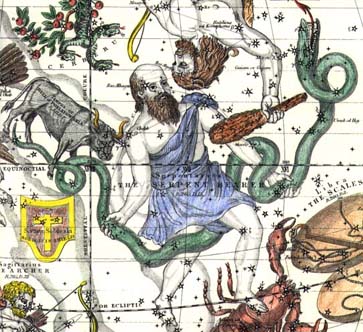
Subject: RE: BS: Hamlet and the Christmas Tradition From: josepp Date: 25 Nov 10 - 10:57 PM /////That Dec 25 was the historical Christ's birthday is a notion dismissed by anyone who has done even a meager amount of study. That that date was a pre-existing feast of the winter solstice in many cultures certainly has significance, and to me the evidence of an attempt by the early Christians to co-opt these disparate traditions, including the essential Roman Saturnalia celebration, into a unified birth of Jesus celebration was simply good marketing.//// Here's the problem: why didn't any of the gospels tell us when this greatest of all men was born instead of leaving it to later generation to co-opt the birth of a solar deity? And by doing so, doesn't that just prove he wasn't historical or why would they do flippantly obscure this supposedly real man under strata of pagan astrological gobbledegook? Wouldn't the genuine memories have been meticulously guarded and preserved?? The reason is, of course, that there was nothing to preserve. The birth stories in Matthew and Luke were provably of later origin. Mark was the earliest of the gospel and he knew nothing of it. John knew nothing of it Paul knew nothing of it. The author of James and Hebrews--all earlier than Matthew and Luke--knew nothing of it. What about Revelation? Here is the birth story according to Revelation: 1And there appeared a great wonder in heaven; a woman clothed with the sun, and the moon under her feet, and upon her head a crown of twelve stars: 2And she being with child cried, travailing in birth, and pained to be delivered. 3And there appeared another wonder in heaven; and behold a great red dragon, having seven heads and ten horns, and seven crowns upon his heads. 4And his tail drew the third part of the stars of heaven, and did cast them to the earth: and the dragon stood before the woman which was ready to be delivered, for to devour her child as soon as it was born. 5And she brought forth a man child, who was to rule all nations with a rod of iron: and her child was caught up unto God, and to his throne. 6And the woman fled into the wilderness, where she hath a place prepared of God, that they should feed her there a thousand two hundred and threescore days. The author clearly states that the birth of Jesus Christ is a celestial event. The woman with the crown of 12 stars is the virgin of the zodiac--Virgo. Clothed with the sun means that the sun was occupying her sign. That she was ready to give birth means that the sun was just about to leave her sign to enter the next and that sign is scorpio--the great dragon of darkness. Where was Libra? Some early cultures didn't have a Libra. So the sun is about to pass into the winter months were darkness reigns over the light. So the sun had to be hidden away and there is your Hamlet angle again--the prince has to be exiled or feign madness to avoid being killed by the usurper of the light. Now if Libra is absent then there must be only 11 signs. Where's the 12th. That sign is Ophiucus who occupies the space between Scorpio and Sagittarius. He is shown wrestling a huge serpent. And in Revelation 12, we read: 7And there was war in heaven: Michael and his angels fought against the dragon; and the dragon fought and his angels, 8And prevailed not; neither was their place found any more in heaven. 9And the great dragon was cast out, that old serpent, called the Devil, and Satan, which deceiveth the whole world: he was cast out into the earth, and his angels were cast out with him. So the sun returns and assumes his rightful rulership. The statement of the dragon drawing down a third of the stars with his tail and casting them to the earth is a reference to cauda draconis or "tail of the dragon" which is the moon's south node, i.e. on the side of the earth away from the sun where the moon falls within the earth's shadow causing a lunar eclipse. But there is also a seasonal cauda draconis: "Cauda Draconis, the Moon's South Node or Dragon's Tail, is associated with the negative sides of Saturn and Scorpio. It can show misfortune and the need to pay for past debts. Cauda Draconis favors the termination of something." http://accessnewage.com/articles/astro/tlouis4.htm In this case, the termination of the sun and the light. As the sign of Scorpio is more than halfway passed, i.e. the rear half or tail of the dragon, he sweeps down a third of the stars as the year progresses towards the winter solstice of which Saturn is the ruler. That is, a third of the stars seen during the spring and summer months move steadily southwards (as does the sun) during winter and hence they appear to be falling to earth as it were. The child of the heavenly virgin, like Hamlet, must flee either bodily or mentally, to weather out the reign of the king of darkness but ultimately will return to conquer him and resume his rightful rule. |
|
Subject: RE: BS: Hamlet and the Christmas Tradition From: josepp Date: 26 Nov 10 - 11:27 AM Ophiuchus also appears in Genesis 3:15 when god says to the serpent: "And I will put enmity between you and the woman, and between your offspring and hers; he will crush your head, and you will strike his heel." A lot of biblical scholars ask who is the "he" that god refers to that is crushing the serpent's head? They don't know because the idiots never bothered to study astrology which is the very foundation of the book they waste their time puzzling over. "He" is, of course, Ophiuchus. Take a look: Ophiuchus One can see that Ophiuchus is stepping on the head of Scorpio, the dragon of the dark. He battles the serpent Serpens. In Greek mythology, the hero Orion is killed when he is stung on the heel by a scorpion (How big a problem are scorpions in Greece?) and in Egyptian lore, Osiris is the constellation of Orion who, when he is seen rising in the east, Scorpio is seen setting in the west. He has risen to vanquish his foe and during that time of year at it's deepest, darkest hour, the sun is reborn and light vanquishes the dark. So Revelation is merely recounting the story of the solar hero's journey through the last quarter of the zodiac--conceived in the body of a virgin (Virgo), flees to the "wilderness" to protect the child from the dark, devouring dragon (Scorpio), Michael (Ophicius) arrives to battle the serpent and overthrows him so that the solar hero may be born on Christmas Day. The reason the virgin must hide for 1,260 days is that this is the amount of days in 3.5 years (approximately) which represents the 3.5 months from the virgin's labors to the appearance of the child on Christmas--Christ's birth. But 3.5 years is 1277 days. Why didn't they just say that? Because 1,260 is a scattering on 2,160 which is the number of years the sun spends rising in a certain constellation. Due to earth's precession of the equinoxes, the sun moves into a different constellation every 2,160 years by working backwards through the zodiac. Christ was imaged as a fish because in his time, the sun rose in Pisces every spring so it was the age of the fish. The sun has now passed from Pisces backwards through the zodiac to Aquarius so that's all the age of Aquarius stuff you've heard about. So a full cycle through all 12 signs takes 25,920 years or about 26,000 years. It is not coincidence that the chapter and verse that the reference to 1,260 days appears in is 12:6. The bible is full of numerology. Especially Revelation. Various words and phrases add up to certain values using a process called isopsephia or gematria. You can look it up if you're curious. The bible is really a very profound document when you learn its secrets but the dopey Christians have no interest. It's analogous to finding a window propped open with a book so they read the book voraciously from cover to cover and analyze every word trying to figure out why the window was propped open. As Carl Sagan said, "They say, 'My god is a small god and I want him to stay that way.'" |